Tuesday, 22 March 2011

pedagogy

Paper from 2007:
In English, the term ‘pedagogy’ is usually used to refer to the ‘science or profession of teaching’ whilst ‘pedagogue’ can be used both in a general sense to refer to a teacher or educator and sometimes, more pejoratively, to someone who instructs in a pedantic or dogmatic manner. The Oxford English Dictionary defines pedagogue as ‘a teacher, especially a strict or pedantic one’ but acknowledges its origin from the Greek word ‘paidagogos’, denoting a slave who accompanied a child to school - from ‘pais’ [boy] and ‘agogos’ [guide].


... However, in continental Europe, pedagogy is used to refer to children’s general upbringing i.e. ‘to education in the broadest sense’ or to ‘bringing up children in a way that addresses the whole child’ [Petrie et al 2006].2.6 Some commentators, acknowledging the difficulties with ‘pedagogy’ for an English ear, have advocated use of the term ‘social education’ whilst others suggest that we should simply get used to it: ‘It may still sound unusual in English, but is rapidly becoming extremely relevant’ [Kornbeck 2007 p.23]. Social Pedagogy and the Young People’s Workforce: A Report for the Department for Education and Skills, 2007
Paper from about 2002:
With respect to primary-aged children, David McNamara (1994: 6) has suggested that the notion of pedagogy has a ‘hostile tone with implications for pedantry, dogmatism or severity’ and noted that it is worrying that the word, traditionally employed to signify the art and science of teaching, should carry negative associations. Mortimore (1999) has described pedagogy as a ‘contested’ term with ‘changing connotations and pressures’, more common in other European countries, in particular, in French, Germany and Russian-speaking academic communities. He has taken the view that it is helpful to define the term in a way that takes the learner into account, otherwise it would be better described under the more limited term of ‘didactics’. His preferred definition is ‘any conscious action by one person designed to enhance learning in another (Mortimore 1999: 3).

Siraj-Blatchford and Sylva (2002) in their recent DfES-sponsored study of effective pedagogy in the early years, have taken a similar view, suggesting that effective pedagogy is both ‘teaching’ and the provision of instructive learning environments and routines. This definition, thus, provided both a suitable starting focus and a reminder that keyword searches would need to include ‘teaching’, ‘instruction’ and ‘learning environments’, as well as ‘pedagogy’.  Early Years Research: Pedagogy, Curriculum and Adult Roles, Training and Professionalism, by Members of the British Educational Research Association Early Years Special Interest Group, 2002?

Wednesday, 8 December 2010

Crows

When I first came to Germany I was struck by this type of crow, which I wasn't familiar with from the south of England:

Turns out it's a Hooded Crow, Corvus cornix, which does appear in the UK, but just not in the southeast; they are mostly in Ireland and Scotland.

In Germany they live along the Elbe, but are otherwise no more common.

Monday, 6 September 2010

OWAD's "Hoist the Jolly Roger"

OWAD's phrase of the day is "hoist the Jolly Roger", which according to them means "get ready to fight" and has 40,000 Google hits. They give an example from a BBC news headline: "St. Pauli ready to HOIST THE JOLLY ROGER over the Bundesliga" and suggest smuggling this new phrase into your conversation by saying "Get ready to hoist the Jolly Roger, the competition are about to drastically reduce prices".

I guess you could try that, but you'd certainly raise a few eyebrows. "Hoist the Jolly Roger" is something you'd only say in the context of pirates; as OWAD points out, the Jolly Roger is the pirate flag. The one with the skull and crossbones. The one St. Pauli fans use, hence the BBC headline.

Google UK gets 83 hits for "hoist the Jolly Roger". All of them are connected to piracy or the Adam and the Ants song of this name.

Tuesday, 4 May 2010

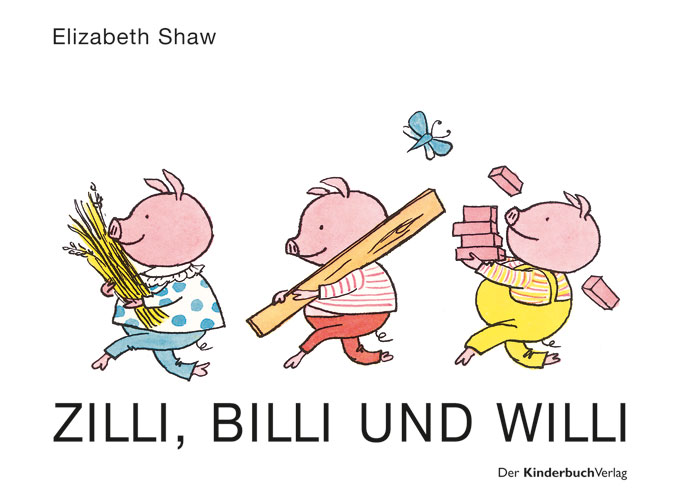
Elizabeth Shaw

Elizabeth Shaw (* 4. Mai 1920 in Belfast; † 27. Juni 1992 in Berlin) war eine irische Grafikerin und Kinderbuchautorin.
Elizabeth Shaw wurde in Irland geboren und wuchs in England auf. Sie studierte von 1938 bis 1940 in London an der Chelsea School of Art. 1940 leistete sie Kriegsdienst und arbeitete bis 1944 als Mechanikerin. 1944 heiratete sie den Bildhauer und Maler René Graetz, der sich im Londoner Exil befand. Mit ihm zog sie 1946 nach Berlin-Zehlendorf.
In Berlin arbeitete sie zunächst für den Ulenspiegel, dann vor allem für den Eulenspiegel und ab 1950 auch als Karikaturistin für das Neue Deutschland. 1959 porträtierte sie 43 Mitglieder der Akademie der Künste (Steinlithographien). Sie illustrierte Gedichte von Bertolt Brecht, schrieb eigene Kinderbücher und illustrierte diese. Es entstanden weitere Illustration zu Büchern von James Krüss, Gerhard Holtz-Baumert, Heinz Kahlau und Rainer Kirsch. Sie starb 1992 in Berlin-Pankow, wo jetzt die 2. Grundschule ihren Namen trägt.
Für ihre Arbeit erhielt sie unter anderen den Kunstpreis der DDR, den Hans-Baltzer-Preis, den Gutenberg-Preis der Stadt Leipzig und den Käthe-Kollwitz-Preis der Akademie der Künste Berlin.

http://www.artshaw.com/

Friday, 26 February 2010

Kontaktperson

This is a word you come across a lot in German. While its direct translation, "contact person", is occasionally used in BrE, it is not very common.

858 Google hits for "contact person" site:uk>
(Of the first ten hits, two are German companies, three are companies from other countries, and one is an "out of contact person", leaving three remaining good hits on that page.)
863 Google hits for "contact person" (in English) site:de >
More hits in Germany than in the UK does not suggest this is always the best translation.

So what do you say in the UK? Let's take some examples in German and find the equivalent.

Rektoratsbeauftragte und Kontaktpersonen zu ausseruniversitären Institutionen und universitätsnahen Einrichtungen >

This is above a table of names and phone numbers of people to contact about institutions linked to a distance university (foundations, societies).

A similar page at the Open University is labelled:

Contact Us
You can contact us at: >

Another page uses a noun:
UK contacts
Worldwide contacts >

The University of Cambridge also uses "contacts">.

Names are not provided. E-mail addresses are not for individuals; they start with "enquiries" - which is also a useful word in this context.

The University of Essex uses contact addresses, contact details>, contacts> and this line:
To contact staff in the Vice-Chancellor's office>
(Here, names are given.)
Or this line, above a similar table to the German one:
Academic Section Staff Contact List>

Wednesday, 6 January 2010

Christmas tree statistics

USA
•36 million – Estimated number of real Christmas trees to be sold in 2006
•46 million – Households that plan to use an artificial tree in 2006 >

UK
Around eight million trees are sold in this country every year. Most of these trees are grown in the UK. Currently, around a third of homes buy a real Christmas tree, around a third have an artificial Christmas tree and around a third have no tree at all. According to the BCTGA, the market is dominated by the Nordmann fir, of which more than four million are sold every year. >

DE
28 Millionen Christbäume wurden 2008 in Deutschland gekauft. >

Tuesday, 5 January 2010

Television viewing

A survey for 2009 by Media Control shows how much TV Germans watch:

Average TV viewing per day: 212 minutes (3 1/2 hrs)
Age 14-49: 182 minutes (3 hrs)
Highest rise - Saxony: 182 minutes (3 hrs), 18 minutes longer than 2008.
Most watching - Brandenburg: 262 minutes (4 hrs 22 mins)
Over-50s in Berlin: 333 minutes (5 1/2 hrs)
Age 3-18 in Berlin: 75 minutes (1 hr 15 mins)

An Ofcom report for 2008 shows that the average number of TV watching minutes in the Uk in 2008 was 225, and in Germany 207. (USA: 277)
It also shows that a TV licence cost £140 in the UK and £163 in Germany, also in 2008.

The CHILDWISE Trends Report 2009 reports that British children age 5-16 watch an average of 2.7 hours per day, up from a low of 2.4 hours in 2006.

Wednesday, 23 December 2009

Smog, 1962

Weitere Todesfälle durch Smog: Luftverschmutzung in Leeds steigt

Guardian, 7. Dezember 1962

Die Gefahren des Smogs, der seit Mitternacht am Montag 67 plötzliche Todesfälle in London verursacht hat, haben sich gestern weiter ausgebreitet. In der Stadt von Leeds, die gestern den dritten aufeinanderfolgenden Tag von dichtem Nebel heimgesucht wurde, wurden 30 Menschen mit schweren Atembeschwerden in Krankenhäuser eingeliefert.
Während der letzten 4 Tage hat sich die Anzahl der Lungenentzündungen in Glasgow verdreifacht.
Die Opfer in Leeds waren zum größten Teil ältere Menschen. Die Luft, die sie einatmeten, enthielt deutlich mehr Schwefeldioxid als beim Londoner Smog von 1952, der viele Todesfälle verursachte. Die Luftmessstation in Kirkstall, ein tiefgelegener Ort, hat in den 24 Stunden bis gestern Mittag 5.195 Mikrogramm Schwefeldioxid pro Kubikmeter Luft gemessen. 1952 war in London die höchste Messung 3.825µg.
In der City von Leeds, ein Stadtteil, der Rauchregulierungen unterliegt, wurden 3.970 µg gemessen; 3 der 9 städtischen Messstationen meldeten noch höhere Konzentrationen. An einem „ordentlichen“ Tag in Leeds, ohne Nebel, ergeben Messungen ca. 400 µg.
In Manchester war die gemeldete Luftverschmutzung dreimal so hoch wie der Durchschnitt von Dezember 1961. Meldungen aus Birmingham waren positiver: laut Amtsarzt Herr Dr. E. L. Millar zeige die Anzahl der Todesfälle in der Stadt keine Anzeichen einer eindeutigen Erhöhung wegen des Nebels. Birmingham profitiere von den Rauchregulierungen. Laut dem Amt für Wissenschaftliche und Industrielle Arbeit war die Luftverschmutzung ähnlich wie beim Smog von 1952, wäre aber ohne die Maßnahmen zur Luftreinigung viel schlimmer gewesen.
Nach klarem Wetter am Nachmittag waren gestern Abend London und 22 englischen Grafschaften von Nebel umhüllt. Bis zum frühen Abend waren viele Ortsteile Londons bereits zum dritten Mal hintereinander völlig bedeckt. Ein Vertreter der Londoner Transportgesellschaft beschrieb die Lage als „die schlimmste der letzten 3 Tage“.
Ein Großteil der RAC Funkrettungstransporter im Zentrum von London saßen gestern Abend im Nebel fest. „Zum Glück gibt es so gut wie keine Fahrer auf der Straße“ erklärte ein Vertreter. „Schlechteren Straßenverhältnissen werden Autofahrer nie begegnen."
Der Londoner Flughafen war seit über 60 Stunden gesperrt. Am Flughafen von Gatwick, der nicht vom Nebel betroffen ist, soll es gestern Abend „chaotisch" zugegangen sein. Einem Verantwortlichen des Luftfahrtministeriums nach musste Gatwick zusätzlich zu den eigenen Flügen auch Flüge von London bewältigen.
Die Funkstreifen des AA meldeten Nebel und stellenweise Eisglätte auf alle Straßen in den Regionen um London und den meisten Grafschaften im Süden, sowie East Anglia, die Umgebung von Birmingham und Yorkshire. Sichtweiten betrugen zwischen 0 und 45 Meter. Meldungen gab es auch über stellenweise Eisglätte auf Straßen in weitere 10 Grafschaften Englands und Wales.

Tuesday, 1 December 2009

Wednesday, 25 November 2009

Fat man of Europe

I'm a little confused. I always thought the UK was the fat man of Europe, and have put up with teasing by Germans (not necessarily thinner than me) about how fat and lazy British people are, convinced that they were actually quite right.
Now on ARD someone mentioned in passing that Germans are the fattest in Europe. Looking it up I find a 2005 document by the International Obesity Task Force:


A study comparing Germany between 1985 and 2002 suggests higher rates than the USA in terms of overweight, with a recent survey suggesting 75% of German men age 25 or over were overweight or obese. This figure is surpassed only in Greece [...] >>

The study is by the International Association for the Study of Obesity (IASO). It's not exactly in favour of Britain: as a Spiegel article from 2007 puts it:

A new study has found that Germany has the highest proportion of overweight people in Europe, partly due to the country's high beer consumption. But Britain, Greece and some Eastern Europe countries have an even higher share of truly obese people.
>>

The Spiegel article has a photo of a fat person ... in Britain. Huh.

The figures, collected from 2002-2004 and presented in 2007, show:

Overweight men (BMI of 25-29.9) - Germany 52.9%, England
43.9%

Overweight women (BMI of 25-29.9) - Germany 35.6%, England
34.7%

Obese men (BMI above 30) - Germany 22.5%, England 22.7%

Obese women (BMI above 30) - Germany 23.3%, England
23.8%

So the Bild's image of Brits with wabblige Bierbäuche is not quite as fair as you might think?

A more recent article in Bild in April 2009 said that British women have a higher average BMI than German women - the highest in Europe. It described how Thibaut de Saint Pol, a French researcher, studied women from 15 EU countries and said that British ladies' average BMI is 26.2, and German ladies' is 24.

However, de Saint Pol's BMI figures are not original research, but are apparently taken from the EC's Eurobarometer 59.0 - which is from the year 2003: the figures are older than those in the IASO's study.

A more recent Eurobarometer (64.3, from 2006) has Germans with an average weight/height ratio of 0.435 and Brits with a ratio of 0.433, i.e. almost exactly the same.

Tuesday, 13 October 2009

OWAD teaches me English

Recently discovered OWAD - One Word A Day, which selects English words that "occur in educated British-American conversation" but are "unknown to most German speakers of English". These words are "within the most frequent 50,000" in the "World Bank of English" and will apparently impress your British and American acquaintances. The writer says "I would ask you to please trust me that the words I offer are useful. "

I've been subscribed for one day and the first word I got was "putpockets". I've never heard it before. Now I've been away from the UK for a while, so I'm willing to concede that my vocab may not be up to date, but I'd like to check how useful this word might be.

First I check the "World Bank of English", of course. I look it up on Google. Two hits.
I discover that the University of Birmingham has a "400 million word Bank of English Corpus" - which is evidently what OWAD is talking about.
It seems the Bank of English is subscription only. I try the related free concordance search but it doesn't seem to work. So I'll have to try Google to find out how common my new word is.

"Putpockets" gets 62,000 hits, but when you go to the last page of results there are 533 hits.
The first is the newspaper article quoted on OWAD, entitled "Putpockets" give Londoners a little extra cash. The quotation marks in the article tell you that this is an unusual word, perhaps a newly coined one. The article is about former pickpockets going round London putting money back into people's pockets. Hence "putpockets".
I whiz through the first three pages of Google hits and they are all news stories based on this article. I look through random pages of hits. Pages 10, 19, 28, 37, 46 and 54 (the last page) of the Google hits are also all stories based on this article.
One blogger on the Telegraph says "The whole wheeze, known as Putpockets, is a publicity stunt dreamed up by a broadband supply company".
One blog comment says "I live in England and its the first I've heard of it! Many of the Stories from the US about England are straight from Fantasy Island."

Which seems to sum it all up really.

Monday, 28 September 2009

Newspaper website slideshows - cultural differences? Or just reflect what's on offer?

Sächsische Zeitung websiteEssex Chronicle website (both 28.09.09)


Monday, 8 June 2009

Wednesday, 22 April 2009

When do people start work?

A survey shows what time people start work in various EU countries.

In March 2009, over the previous 6 months the average time for German workers was 8.44 and for British workers it was 9.10.

According to the Guardian the survey is by OfficeMetrics, a software company, and covered 80,000 users of their software.

Monday, 5 January 2009

Winter tyre statistics

In the UK, where annual temperatures often range from -15°C to 30°C, usage of cold weather (winter) tyres is far less common, as legislation dictating changeover does not exist. >
In Germany legislation was brought in on May 1 2006. The traffic regulations (StVO) now say that cars must be fitted to suit the weather conditions, including having appropriate tyres. What is "appropriate" is not described in any more detail. If drivers contravene the rule, they pay a EUR 20 fee; if they hold up the traffic, there is a EUR 40 fee and they get a penalty point on their licence.
75% of people in the UK would not consider fitting winter tyres. >
Winter tyres are a mere three percent of the UK's total tyre market. This poor statistic compares with ... 50 per cent in Germany. >
(2006) 77 percent of German drivers have a set of winter tyres; 6 percent use all-season tyres.... 80 percent of those who change their tyres do so when the temperature drops below 10°C; one in ten waits for the first snowfall. >
In Germany, winter tyres are recommended when the temperature (day or night) drops below 7°C. Winter 2007/8 in the UK - The final mean value for the season is 4.9 °C >
(2006) In Bavaria, 90% of drivers have winter tyres, in eastern Germany, 70 percent have them. In western Germany, almost one in five uses summer tyres all year round, and in northern Germany that is the case for one in four. In Lower Saxony 40 percent of drivers use summer tyres all year round. >

Tuesday, 14 October 2008

Grüner Punkt - the Green Dot

It isn't really a dot, but a circle (often black and white, not green) with two yin-and-yang arrows.

This symbol is actually used in the UK, and called "the Green Dot", but will people instantly recognise this name as they do in Germany?


In Germany if packaging has the Green Dot on it, consumers can usually put it in special yellow bags or bins which are collected for free (organised by DSD GmbH), saving them money on waste collection. The dot means the producer has paid a fee for their products to be collected in mainland Europe.
In the UK, this collection system is not used.
Nonetheless, the dot was introduced in the UK in 2001 when Valpak UK Ltd (the UK company which ensures packaging complies with European norms) entered into an agreement with Pro Europe, the umbrella organisation for European packaging and packaging waste recovery and recycling schemes. In the UK, the dot is only for products sold in mainland Europe.

This has recently caused some controversy, partly as people don't know what the dot is:

"The intertwined arrows of the Green Dot appear on a range of products from soap and detergent dispensers to toothpaste tubes and crisp packets.
It is widely believed to signify that the product can be recycled and may encourage environmentally-friendly shoppers to buy it.
However the sign is not a recycling symbol and has no meaning in the UK. Lucy Yates, the National Consumer Council's policy advocate, said: "It should be removed from all packaging in the UK because it's very misleading
." Telegraph, 1 September 2008

But it hasn't caused enough controversy to mean that everyone is aware of the Green Dot being used in the UK:
"in Germany there is something called the Green Dot Scheme" (Martin Wheatley, March 18 2008, House of Lords)

"Consumers in the UK are unlikely to know about the PRN system, because local authorities largely undertake the collection of domestic material" (Europe Goes Green Dot brochure from pro Europe, 2007) - the PRN is a Packaging Waste Recovery Note, the commercial side of the Green Dot.

To sum things up, the Green Dot is not yet well recognised in the UK and needs some explanation.

Tuesday, 16 September 2008

Lolcat / Kitteh

http://en.wikipedia.org/wiki/Lolcat
Useful vocab:
lolspeak
cat macro
Im in ur noun, verb-ing ur related noun
subjects: i has dem
I has a noun
Invisible noun
[noun] haz a flavr
My noun, let me show you it/them
adjective] cat is [adjective]
Halp
Nom Nom Nom
I CAN HAS CHEEZBURGER?"

Tuesday, 12 August 2008

Pronunciation of "cat"

Leo discussions:
pronounciation of cat like "cut"
Dt. Artikel für engl. Lehnwörter

Found a nice site which helps with this pronunciation recently:
BBC Learning English - æ
This part also usefully distinguishes between three similar sounds including æ:
BBC Learning English - Egg, Cat and Cup

Monday, 12 May 2008

Drugs statistics - young people

Taken from
The life of women and men in Europe
2008 edition

Proportion of young men and women aged 15-24 who smoke, 2004

Germany
women = about 44 %
men = about 50 %

UK
women = about 36 %
men = about 32 %

Use of cannabis among students aged 15-16, 2003

Proportion having used cannabis 40+ times

Germany
Girls = about 3 %
Boys = about 6 %

UK
Girls = about 6 %
Boys = about 13 %

Wednesday, 19 March 2008

respectively

When is it OK to translate "beziehungsweise" as "respectively"?

Collins e-Großwörterbuch suggests "respectively" for one meaning of "beziehungsweise":

b) (= im anderen Fall) and ... respectively; zwei Briefmarken, die 25 beziehungsweise 55 Cent kosten two stamps costing 25 and 55 cents respectively

corresponding to Duden's:

2. und im anderen Fall: ...erhielten die beiden Hauptangeklagten achtzehn b. neun Monate Gefängnis (Prodöhl, Tod 247).

Definition b) has another example where "respectively" is not suggested:
geben Sie in Ihrer Bestellung rot beziehungsweise blau als gewünschte Farbe an state your choice of colour (Brit) or color (US) in your order: red or blue)

Collins e-Großwörterbuch mentions two other meanings of "beziehungsweise":

a) (= oder aber) or
c) (= genauer gesagt) or rather, or that is to say

corresponding to Duden's:

1. oder; oder vielmehr, genauer gesagt

Let's look at Duden's 2: und im anderen Fall more closely. Can we always use "respectively" when translating this?

English dictionaries name two meanings of respectively:

In the order mentioned

Often listed as the only meaning of respectively, in smaller dictionaries:

re•spect•ive•ly in the same order as the people or things already mentioned: Julie and Mark, aged 17 and 19 respectively ©Oxford University Press, 2005.

re‧spec‧tive‧ly in the same order as the things you have just mentioned: The cups and saucers cost £5 and £3 respectively. Longman Dictionary of Contemporary English

Fowler's Modern English Usage: "respectively is correctly used when the sense required is 'each separately or in turn, and in the order mentioned'".

AHD Singly in the order designated or mentioned: I'm referring to each of you respectively.

Singly, separately
(but not necessarily in the order mentioned)
Listed in larger dictionaries.

New SOED
respectively
2 Relatively to each of those in question individually; singly, separately; each individually or in turn, and in the order mentioned.
SCOTT FITZGERALD The crowd had split into two sections, following, respectively, the man on a stretcher and the girl.
N. MANDELA The last men to be sentenced..received twelve and seven years respectively.

respectively (adv.) means “separately and individually” or in the order specified,” as in We reviewed each of the three programs respectively.
The Columbia Guide to Standard American English. Copyright © 1993 Columbia University Press.


Robert Schoenfeld believes you can only translate "beziehungsweise" as "in the order mentioned", but (he seems to be saying) not as "singly, separately". Is he right? The second lot of dictionary definitions above seem to suggest not, as does the e-Großwörterbuch translation at the top of this post.

The chemist's English By Robert Schoenfeld
"in German usage beziehungsweise applies to a situation where a certain number of entities will vary in properties or behaviour, but this variation is nonrandom. It is not necessary (but it is permissible), in German, to list these entities one by one.
In this lies the key difference to
respectively. This word means exclusively "in the order named". In other words, it is obligatory to name the members of the set of entities one by one (E1, E2, etc.) and then match them, in the same order, to the properties P1, P2, etc. An example is provided by the following sentence:
The percentages of iron, manganese, nickel, and zinc were, respectively, 30, 26, 24, and 20."

Modern (post-1990) book examples by native speakers of English where "respectively" does not mean "in the order mentioned"

--> Got up to p16, still not found one

Still working on this!